
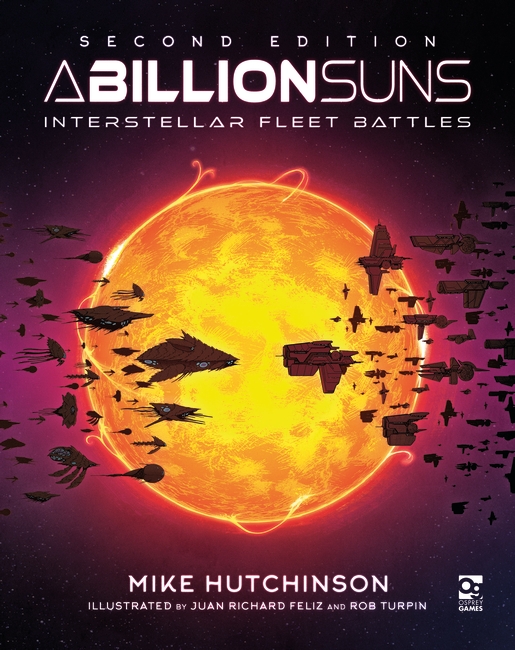
We interrupt your scheduled corporate enrichment seminar with a special report from Fortimus IV. Galactic News Central's Glax Vane has cornered designer Mike Hutchinson to answer a pressing question from shareholders across known space: can you still bankrupt your corporation in pursuit of victory in A Billion Suns: Second Edition?
Join us as we explore Hypergrowth, a game mode where debt is tomorrow's problem, profits are everything, and every fleet deployment is a calculated business risk.
**************
[Glax Vane (Galactic News Central)] Welcome friends to this exclusive corporate retreat overlooking the shining purple seas of Fortimus IV. I have pulled designer Mike Hutchinson away from the exquisite space kraken canapes to tell us about his new intergalactic business management handbook, A Billion Suns: Second Edition, (cunning disguised as a tabletop miniatures wargame of interstellar fleet combat).
In our last conversations, we spoke about how the second edition of A Billion Suns works to make the game more accessible, and provide a straightforward battle game mode. However, for many, the thing that made the first edition of the game so unique was the “deploy anything, pay later” economic gameplay. Has that been lost in the new edition?
[Mike Hutchinson] Not at all! The great advantage of the “Eras of Play” structure of the new edition is that I can provide wildly different-feeling game modes supported by a single core engine. This learn-once, deploy many-times structure is why I talk about A Billion Suns: Second Edition as the ultimate spaceship gaming toolkit!
The knotty, Real-Time-Strategy-like economic gameplay of the first edition is preserved in Hypergrowth, the (unabashedly) most expert and complex Era of Play, only for only the most cocksure executives. It supports 2–4 players.
[Glax Vane] The big hook with the Hypergrowth Era of Play is that you do not build a fleet list in advance, nor do you deploy any ships at the start of the game. In the first edition, that made figuring out what miniatures to collect and paint a little tricky. Have you improved that?
[Mike Hutchinson] Yes. One of the changes from the first edition is that you now build a Shipyard before your Hypergrowth game. This shipyard acts as a sideboard during the game; you can only requisition units from your pre-defined Shipyard.
I wanted to retain the openness of the first edition, but provide a sane way to actually buy and paint ships in advance of your first game. Of course, for the experienced and battle-hardened CEOs among us, I also provide an “expert” option that lets you play with unlimited shipyards, just like in the first edition.
[Glax Vane] Deploying ships costs Credits, which are both your deployment budget and your victory points?
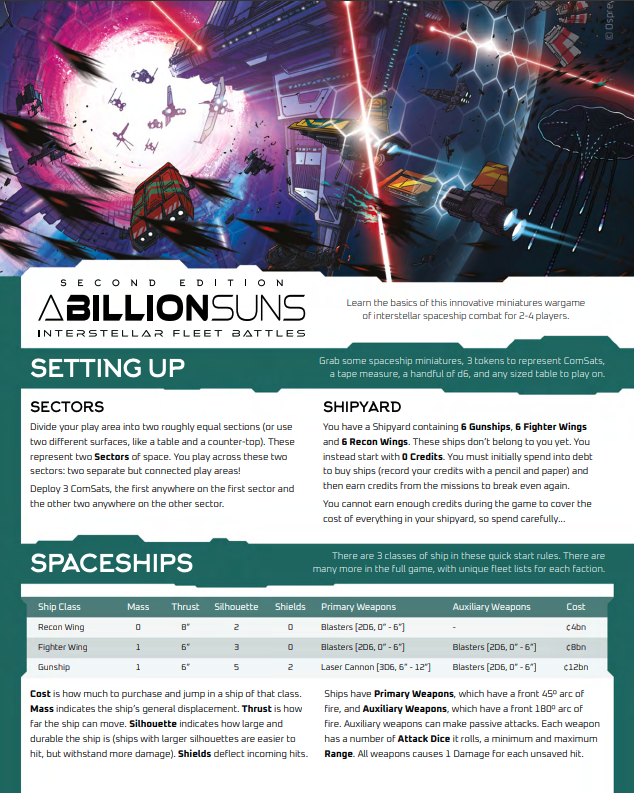
[Mike Hutchinson] In Hypergrowth games, you have a Credits Tracker which starts the game at zero. You initially have to spend your corporation into debt to requisition units from your Shipyard. Scoring the missions earns you Revenue, and the aim is to earn enough credits to work yourself out of debt and end the game with the highest profit.
The core strategic tension is balancing investment against return. You could deploy a bunch of expensive battleships to swamp and overpower me, but you have to be sure you'll earn enough revenue to cover your costs, or I can win even if I earn less from missions because I spent less on units. But if you deploy too meekly, I can bully you off the objectives or beat you to the key mission resources and out-earn you. You’ll need to watch how I deploy and then figure out whether to overbid or undercut. This deployment happens at the start of every round, so the game is a constantly evolving strategic mind-game as well as a tactical combat situation.
[Glax Vane] And these mind-games unfold over multiple tables!? How does that work?
[Mike Hutchinson] That’s right. As you roll to generate your two missions for the game, either or both might add an additional “Sector” to your game. You divide your play area into roughly equal sections (or use physically separate different surfaces, like a table and a counter-top) to represent these discrete sectors of space. They are separate but connected, forming a really science-fictiony-feeling play space.
You place Jump Points from which you jump in your ships, and you can even Jump Hop between these sectors via your Jump Points to surprise and outmanoeuvre your competitors. A Billion Suns doesn’t feature 3D movement, but the Sectors and jump points system provides a very cool “3D chess” aspect that will make your brain rotate 90-degrees once you figure out how to use it to your advantage.
[Glax Vane] I can see the service droids are starting to circulate with more Galaxian Triple-Fizz cocktails, so I suspect our interview is coming to an end. For those with an interest in pursuing a career in intergalactic corporate management, where can they learn more?
[Mike Hutchinson] Download the free Quick Start Rules PDF, which gives you a preview of the Hypergrowth gameplay, with multiple play areas and real-time requisition of units.
**************
A Billion Suns: Second Edition brings back the beloved ruleset for epic space fleet battles with a revised and improved hardback edition with new illustrations by Juan Richard Feliz and Rob Turpin.
08th December (US) // 10th December (UK)
Keep your communicators open as we’ve got more previews coming to the blog over the next few weeks.
Comments
You must be logged in to comment on this post. Click here to log in.
Submit your comment