
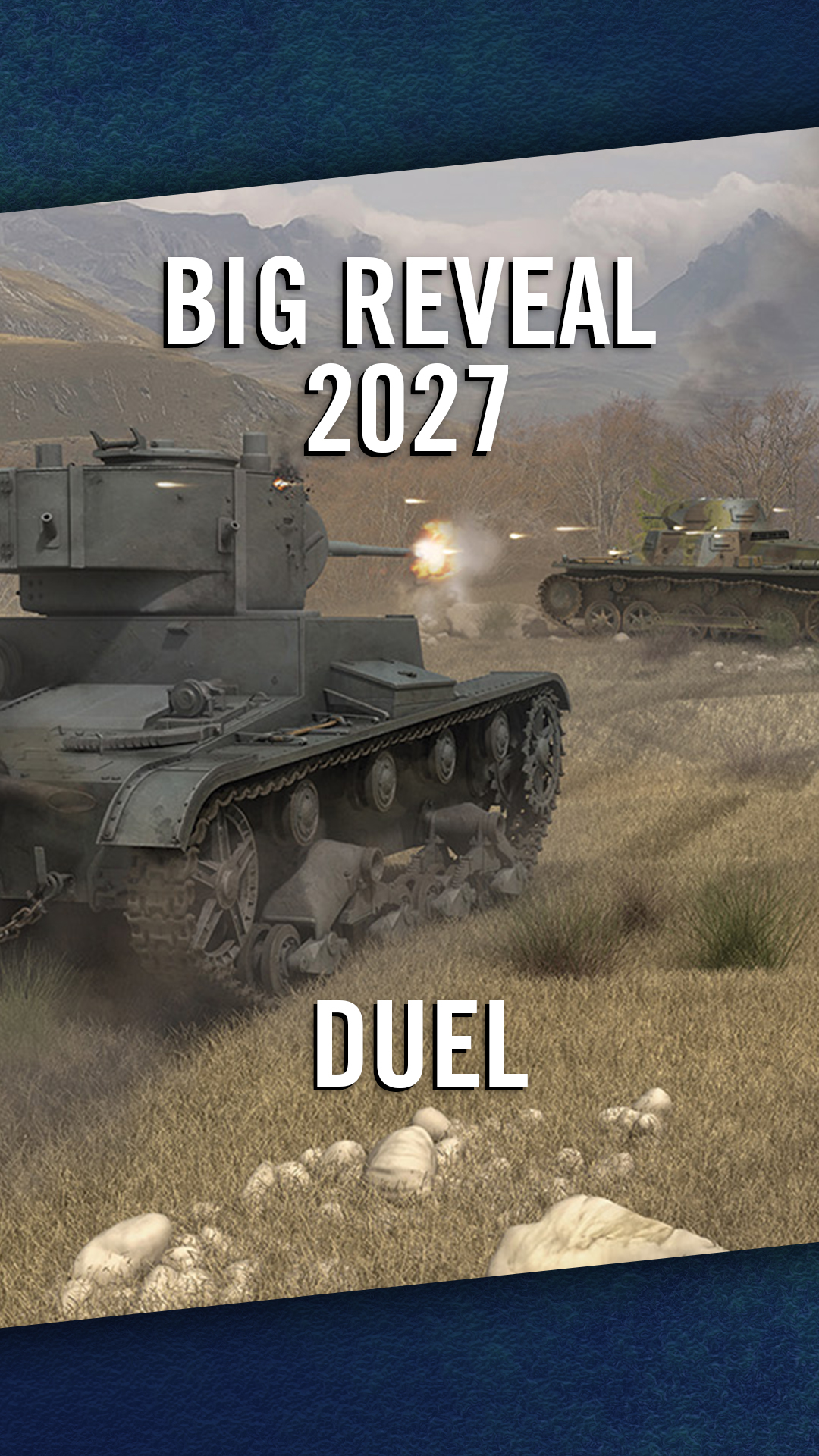
DUE 153 Spitfire V vs Fw 190: Northwest Europe 1941–42
By Andy Saunders
Illustrated by Gareth Hector and Jim Laurier
21/01/2027
An illustrated account of the challenge posed to RAF Fighter Command’s Spitfire V-equipped squadrons by the Luftwaffe’s Fw 190A, and the ways in which British and German pilots fought to control the skies on the Channel Front.
The introduction of Focke-Wulf’s Fw 190A to Luftwaffe service presented RAF Spitfire V pilots with a formidable new foe that could quite literally run rings around them. First encountered over France in September 1941, the Fw 190 – or ‘Butcher Bird’ – soon demonstrated its startling capabilities, taking RAF Fighter Command completely by surprise and forcing the swift development of new tactics and methods in an attempt to counter it. The actions that ensued were some of the most fiercely contested of the air war in northwest Europe, and would lead to the production and eventual fielding of the Spitfire IX.
In this new study, European air war expert Andy Saunders details how the RAF – having perhaps become complacent about the superiority of the Spitfire – found itself left behind with an inferior fighter. Covering the introduction to service of both the Spitfire V and the Fw 190, the fighters’ first encounters and the battles that shaped subsequent tactics and design, the volume combines combat reports and first-hand accounts with archive photographs and newly commissioned artwork and formation diagrams to convey what it was like to be a fighter pilot in both aircraft from 1941 to 1943.
DUE 158 Typhoon vs German Flak Defences: Western Europe 1943–45
By Matthew Bone
Illustrated by Gareth Hector and Jim Laurier
29/04/2027
An illustrated study of the evolving tactics that powered the deadly clashes between the RAF’s Typhoon Mk IB fighter-bomber and the Flakwaffe's defending anti-aircraft arsenal.
The Flakwaffe’s role was to protect the Wehrmacht’s men, machines and material from aerial attack. Arrayed against them was the RAF’s 2nd Tactical Air Force (TAF), whose fighter-bomber spear was tipped with the Typhoon Mk IB, a fighter modified beyond its original intent. The tactics and weaponry of both adversaries evolved as each sought to outdraw the other, with ‘Bombphoon’ and rocket Typhoon squadrons combining their efforts whilst the Flakwaffe laid deadly traps in fields and on trucks and railway wagons.
In this engrossing study, Typhoon expert Matthew Bone chronicles the exploits of the 2nd TAF’s fighter-bombers and the Flakwaffe arsenal into whose crosshairs they ventured. Drawing on contemporary records of Typhoon operations and historical details of Flak crews, this detailed account utilises newly commissioned artwork, maps and diagrams to shed fresh light on the tactical development of both sides, and the price the RAF ultimately paid for victory.
DUE 160 M36 Tank Destroyer vs Jagdtiger: North West Europe 1944–45
By William E. Hiestand
Illustrated by Edouard A. Groult
29/04/2027
This fully illustrated study examines the combat histories of the US Army's M36 tank destroyer and Germany's mighty Jagdtiger during 1944–45.
In the climactic months of World War II in Europe the M36 tank destroyer entered US Army service and Nazi Germany’s monumental Jagdtiger also reached the front line. While the M36 was an upgunned development of the M10, the Jagdtiger was based on the chassis of the Tiger II heavy tank. The M36 had its 90mm main gun in an open-topped turret, while the Jagdtiger’s mighty 128mm armament, mounted in a casemate, could theoretically outrange and defeat any Allied tank. In the event, the US vehicle proved to be a dependable counter to Germany’s heavy tanks, but the Jagdtiger developed a reputation for mechanical unreliability.
While the Jagdtiger was issued to just two German Army anti-tank units, the M36 equipped seven US Army tank-destroyer battalions by the end of 1944 and had largely supplanted the earlier M10 by war’s end. In this book, William Hiestand explains how both types saw combat in Operation Nordwind (31 December 1944–25 January 1945), intended to support faltering German forces in the Battle of the Bulge. Featuring rare photographs, specially commissioned full-colour artwork and mapping alongside the authoritative text, this study tells of the story of these two very different vehicles in combat in 1944–45.
DUE 161 Hornisse/Nashorn vs T-34: Eastern Front 1943–44
By Jacek Zabielski
Illustrated by Richard Chasemore
24/06/2027
Fully illustrated, this study investigates the battles between the German Hornisse/Nashorn tank destroyer and the Red Army’s formidable T-34 tank during 1943–44.
Designed to defeat Soviet armour at long range, the SdKfz 164 Hornisse mounted the formidable 8.8cm PaK 43 anti-tank gun on a hybrid tank chassis with an open top. The Hornisse made its combat debut in the battle of Kursk in July 1943, equipping heavy anti-tank battalions. Its principal opponent, the T-34 medium tank, was a mainstay of the Red Army’s armoured formations, combining excellent mobility and sloped armour with the 76.2mm F-34 main gun. By mid-1944 the T-34 had been simplified and uparmoured, with its main armament becoming the 85mm ZiS-S-53 gun.
In this fully illustrated study, armour expert Jacek Zabielski reveals how the Hornisse performed during Operation Zitadelle and beyond, harnessing its superb accuracy and long-range firepower to knock out Soviet tanks while remaining out of range. He shows how the Red Army’s T-34 crews built on their hard-won battle experience and improved their training and tactics to counter the long-range threat posed by the Hornisse amid the open steppe terrain of the Eastern Front battlefields. The authoritative text is complemented by rare photographs, full-colour mapping and specially commissioned artwork showing the two types in combat.
DUE 159 G3M “Nell” and G4M “Betty” vs US Navy Warships: 1941–44
By Mark Lardas
Illustrated by Jim Laurier
30/09/2027
An illustrated study of the land-based Imperial Japanese Naval Air Force (IJNAF) long-range twin-engined bomber and its fight against the US Navy for domination of the Pacific theater.
Developed as a means of compensating for the modest number of warships Japan was permitted to build under the strictures of interwar naval limitations treaties, the land-based attack bomber was the IJNAF’s response. Mitsubishi’s G3M "Nell" and G4M "Betty" demonstrated their effectiveness in this role during the first week of the Pacific War by sinking the Royal Navy battleship Prince of Wales and battlecruiser Repulse. Yet their main opponent proved to be the US Navy, in large part due to its greater numeric presence in the waters over which Japan fought.
In this eventful volume, Pacific War specialist Mark Lardas examines how the IJNAF employed its twin-engined bombers against US Navy warships in a series of engagements from 1942–44, and details how the Americans responded to these low-level, frequently nocturnal, attacks. Newly commissioned artwork, maps and tactical diagrams combine with specially selected photographs to bring to life clashes from during the Battle of Makassar Strait, the Battle of Rennell Island, and other key events, vividly demonstrating the strengths and weaknesses of both sets of combatants, aircraft, and warships.
The next post will be the Combat Aircraft Reveal on 31st July.
Comments
You must be logged in to comment on this post. Click here to log in.
Submit your comment