
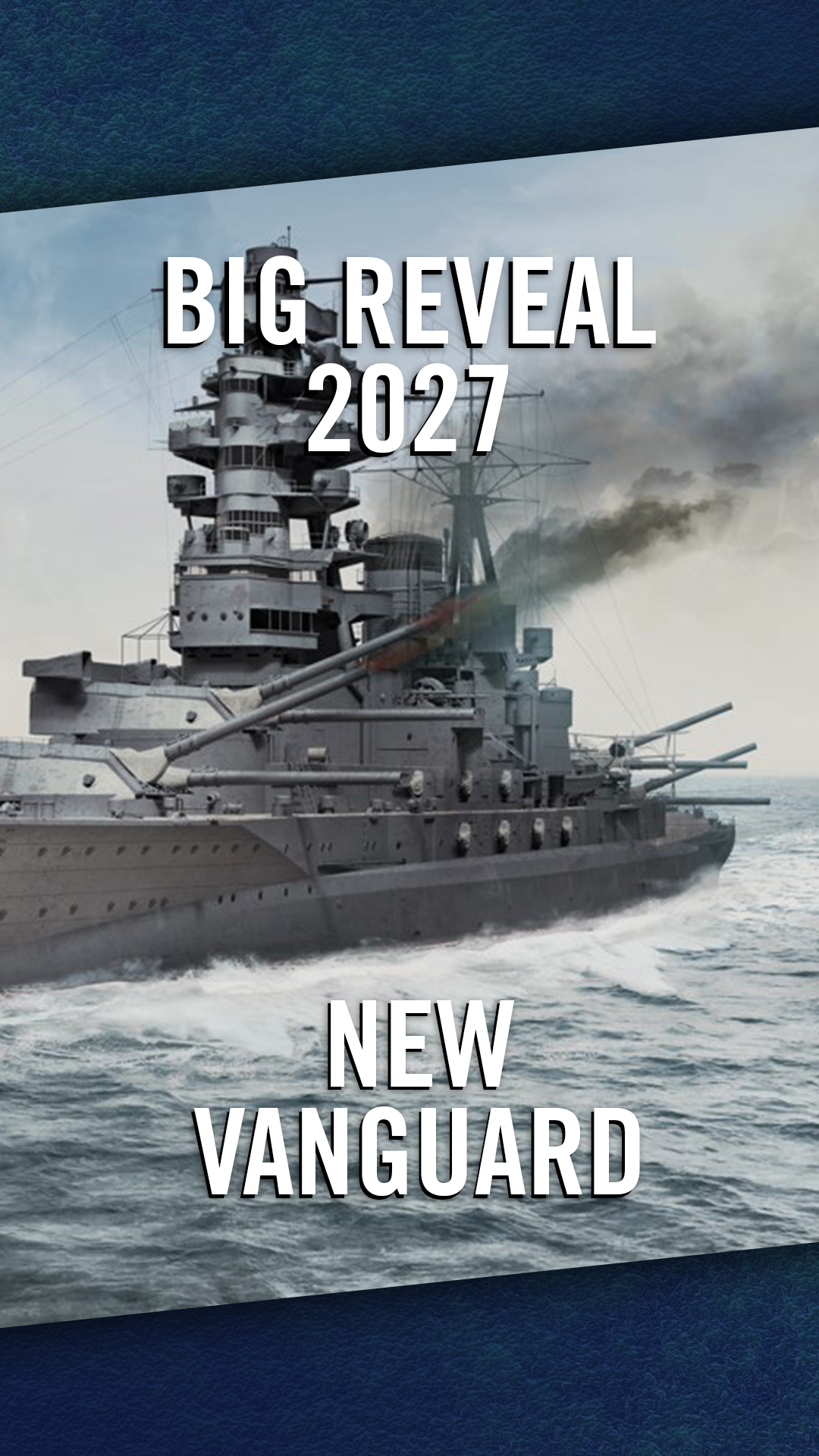
This year’s New Vanguard titles cover World War II armoured warfare in theatres as diverse as Poland, Burma and Italy, while the naval list includes one long-awaited subject – Flower-class Corvettes – as well as Stefan Dramiński’s in-depth look at the IJN’s Takao-class cruisers, and engaging histories of the Royal Navy’s preparations to counter Operation Sealion, and of the task force sent to sink the Bismarck.
NVG 355 Tanks in Southern France 1944: Operation Dragoon to the German border
By Steven J. Zaloga
Illustrated by Felipe Rodríguez
21/01/2027
Two months after D-Day, the Allies began the liberation of southern France. Fully illustrated, this study explores the Allies' unique US/Free French tank force, and the Panzers they faced.
Much less known than the Normandy landings and the campaign in northern France, the second part of Operation Overlord began on August 15, 1944 with the Operation Dragoon landings in southern France. It involved a substantial Allied tank force that took part in the amphibious landings and the subsequent campaign via the Rhone valley to the German frontier in the summer and autumn of 1944.
In this book, world-leading armour expert Steven Zaloga examines the unique Allied tank force that fought this campaign, and the single Panzer division that the Germans could field against them. The Allied force consisted of two main elements: US army tank battalions and tank destroyer battalions of the Seventh US Army, and French tank divisions of the 1st French Army. The US Army units were battle-hardened veterans of the campaigns in North Africa, Sicily and Italy. The French tank units were raised with US aid and training in North Africa in 1943 and saw their combat debut during Operation Dragoon.
With rarely seen photos and meticulously detailed original illustrations, this book provides a fresh look at this largely ignored subject. It also details the particularly colourful markings of the tank units involved in these campaigns.
NVG 356 Tanks in the Burma Campaign 1942–45
By Jack Bowsher
Illustrated by Felipe Rodríguez
18/03/2027
A fully illustrated survey of tank warfare in the Burma campaign, and how the Allies developed tank-led all-arms warfare in the most unlikely theatre.
The role of Fourteenth Army’s tanks in Burma is one of the least-known aspects of the ‘Forgotten War’. From February 1942 to May 1945, as the British and Indian armies fought first in retreat and then on the offensive, armour was key to battling Japanese infantry, bunkers, and anti-tank guns.
Jack Bowsher draws on years of research to assess how tank warfare developed in Burma, starting with the improvised heroics of 7th Armoured Brigade, who were diverted suddenly to its defence. The first offensive use of tanks was in 1943 at First Arakan; although a disaster, this was the catalyst for transforming armour in the theatre. In 1944, equipped with more powerful medium tanks, armoured units were decisive in turning back the U-Go invasion of India: at Imphal and Kohima incredible efforts were made to get tanks into action in the mountains where they overwhelmed the Japanese. By 1945 tanks were spearheading Fourteenth Army’s offensive, most notable in the Battle of Meiktila, where all-arms columns, led by the 255th Indian Tank Brigade, struck the Japanese 80 miles behind the front line.
Packed with original illustrations of the tanks involved and archive combat photos, this is an essential guide to how tanks proved themselves in the difficult terrain of Burma.
NVG 357 Warships in the Battle of Britain 1940: The Royal Navy's plans to defeat Operation Sealion
By Angus Konstam
Illustrated by Edouard A. Groult
29/04/2027
Fully illustrated, this is the first book to study the Royal Navy’s World War II plans and preparations to defeat any German invasion force at sea.
While ‘the Few’ of RAF Fighter Command fought to deny the Luftwaffe superiority over southern England, it was the Royal Navy that was ultimately charged with defeating any invasion force at sea. All the warships the Navy could spare were deployed to ports in home waters, and if an invasion had been launched, it would have been a fight to the death.
Yet this is the first book ever to examine how the Royal Navy prepared for this climactic battle. Naval historian Angus Konstam here draws on a wealth of records and accounts to present a concise study of sea power in the battle for Britain’s survival, from the Home Fleet battleships in Scapa Flow to motor torpedo boats on the front-line Channel ports. He explores their deployments and doctrine for responding to an amphibious invasion, explains what success would have depended on, and evaluates the effectiveness the Royal Navy would likely have had against a German invasion fleet.
Illustrated with detailed colour profiles of warships involved, archive photos, new artwork and mapping, and including the roles of intelligence-gathering, technology and airpower in the anti-invasion plans, this unveils the hidden, maritime side of the Battle of Britain.
NVG 358 Tanks in Poland 1939: German and Polish armor in the first Blitzkrieg
By Steven J. Zaloga
Illustrated by Felipe Rodríguez
24/06/2027
Illustrated throughout, an expert study of the tanks that fought the Poland campaign in 1939, and their combat performance.
The opening campaign of World War II saw the first full-scale armoured clashes between modern European armies. However, the clash was less one-sided than many believe.
In this book, world armour expert Steven J. Zaloga presents a fresh analysis of the tanks of the German and Polish armies during the 1939 invasion, drawing on and presenting combat data from untapped archival accounts. He explains how the technical disparity between the two sides was not as great as generally assumed, and the victory of the Panzers relied more on their three-to-one numerical superiority. Germany was still behind its goals in fielding its modern PzKpfw III and PzKpfw IV tanks and so depended on the weaker and more poorly armed PzKpfw I and PzKpw II tanks. Although the bulk of Polish tanks were the obsolete TK and TKS tankettes, Poland had about 200 of the modern 7TP light tank, armed with a powerful Swedish Bofors 37mm gun.
Packed with historical photos from little-known archives, and superb original profiles of the tanks involved, this is a concise study of the reality of tank warfare in the first shots of the war.
NVG 359 Warships in the Bismarck Hunt 1941
By Angus Konstam
22/07/2027
A fully illustrated visual and technical guide to the Allied warships that hunted down the famous German battleship Bismarck in May 1941.
The escape of the great German battleship Bismarck into its Atlantic hunting grounds, followed by the destruction in the Denmark Strait of HMS Hood, and the Royal Navy’s subsequent, desperate hunt to intercept and destroy Bismarck, remains one of the most dramatic and famous episodes of World War II.
For the first time, this book presents a comprehensive visual and technical guide to the force that hunted down the Bismarck. Naval historian Angus Konstam presents details of all the Allied warships that took part in the chase, and detailed colour profiles of how the major ships appeared during the hunt, plus the most important destroyers involved. He also examines the qualities and capabilities of the warships involved, and the state of weaponry and technology in mid-1941, especially the radar and aircraft that were key to the successful outcome of the chase, and recounts the story of the hunt and the units involved.
Also featuring archive photos, data tables, mapping, and newly commissioned artwork of key moments in the battle, this is a comprehensive guide to one of the most famous task forces of the war.
NVG 360 Flower-class Corvettes of World War II
By Mark Lardas
Illustrated by Adam Tooby
30/09/2027
Illustrated throughout, this is a technical and operational study of the Flower-class corvettes, the mass-produced escorts that were key to victory over the U-boats.
The Flower-class corvette was one of the iconic warships of World War II. It was not a glamorous ship. It was slow, small and designed for one purpose. Yet, heavily laden with depth charges and armed with four depth-charge throwers (and later a Hedgehog mortar), all guided by sonar, it was deadly to submerged U-boats. Because it could be built quickly and cheaply 294 were built during the war, chiefly in Britain and Canada, but also in France before it fell in 1940.
In this book naval historian Mark Lardas explains how the Flower-class was designed as a coastal escort, but was pushed into service on transatlantic convoys, largely because nothing better was available. The smallest warships in oceanic service, they fought in virtually every convoy battle of World War II. Yet service aboard them was hard. They were crowded, seaworthy, but difficult to live on.
Illustrated throughout with archive photos and detailed colour reconstructions, this is the story of the legendary workhorses of the convoy battles of World War II.
NVG 361 Takao-Class Heavy Cruisers 1932–45
By Stefan Dramiński
Illustrated by Stefan Dramiński
28/10/2027
Illustrated with detailed colour reconstructions and archive photos, this is a concisely detailed history of Japan’s powerful Takao-class heavy cruisers of World War II.
Laid down in the late 1920s and commissioned in 1932, the four ships of the Takao-class were ostensibly Treaty cruisers, but as built they were overweight. They were armed with 8-inch guns, a heavy torpedo armament and a large and extensively equipped bridge structure, but their excessive weight caused stability problems.
In this book, renowned naval researcher and illustrator Stefan Draminski examines and reconstructs these powerful warships, which saw much active service during World War II. Often operating together, the Takao-class saw action in the Indian Ocean raid, at Guadalcanal and the Solomons, before all four took part in the last major battles of the war, at Philippine Sea and Leyte Gulf, where three were sunk and Takao crippled.
Fully illustrated throughout, this is a detailed examination of the construction, technical qualities and operational history of one of Imperial Japan’s most active cruiser classes.
NVG 362 Allied Tanks in Italy 1943–45
By Steven J. Zaloga
Illustrated by Felipe Rodríguez
25/11/2027
An expert study of Allied tanks in the Italian campaign, the least-known theatre of armoured warfare in World War II.
From the landings in Sicily to the slow grind up the spine of Italy, Allied tanks fought crucial parts in battle after battle, and yet tank warfare in the Italian campaign remains little-known.
In this book, world armour expert Steven J. Zaloga explains how although the mountainous terrain of Italy did not provide ideal tank country, they were an essential support weapon during all of the major battles in Italy. The campaign also showcases the sheer variety of Allied armour and armies of late World War II. Besides the British and US, there were numerous Commonwealth armies including Canada, New Zealand, and South Africa as well as contingents from the Free French and Polish armies.
With superb new illustrations reconstructing the tanks involved from various armies, this book offers the first accessible overview of Allied tank use in Italy including previously unpublished data about the various armies involved, along with a fresh selection of photos.
The next Big Reveal post will be Duel on 24th July.
Comments
You must be logged in to comment on this post. Click here to log in.
Submit your comment