
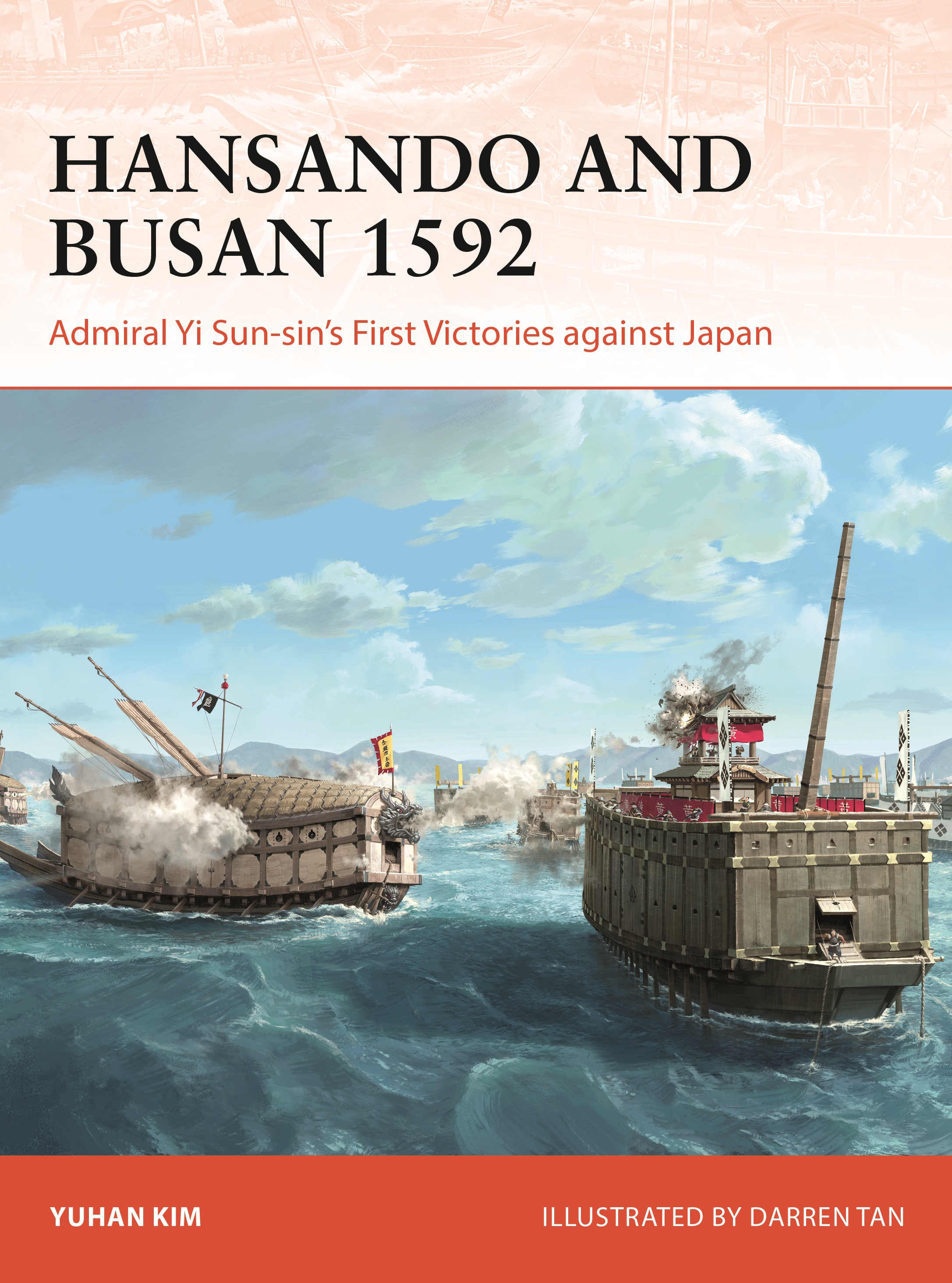
Most students of military history have heard of Admiral Yi Sun-sin, or at least of his turtle ships. The internet certainly seems to consider him a worthy contender against Nelson for the coveted spot of ‘history’s greatest admiral’. While YouTube videos about him rack up millions of views, surprisingly little has been written about him in English, and almost no books focusing specifically on his campaigns.
The idea of writing a book on Admiral Yi had been on my mind for some time, especially after I watched the movie Noryang in theaters in Korea while I was doing research for my senior thesis on the Joseon military doctrine and strategy in the 1636 Qing invasion of Korea. I was quite surprised that there were almost no studies in English specifically about Yi beyond a few books about the entire Imjin War, and took it upon myself to write a book about him. With Korean popular culture in the vogue, I figured this was as timely a book on Korean history could get, to ride the Korean wave and tell the story of Admiral Yi to a wider audience. Hansando and Busan covers the naval battles of the Imjin War from the opening shots to Yi’s promotion to commander of the united fleet in 1593.
There are many popular misconceptions about Admiral Yi, his campaigns and the Joseon navy that Hansando and Busan seeks to dispel. The most likely construction and tactical use of the turtle ship has been shrouded in military mythos. Yi is certainly deserving of the superhuman status bestowed upon him in Korean history for his incredible tactical acumen and strength of personal character, particularly in the later war (which is not covered in this book). Like all great historical figures, Yi has been subject to revisionism, depending on what message the controlling government wanted to impart to the Korean population through a popular hero. This, however, has led to an outsizing of his grand strategic impact on the war, at the expense of the Ming intervention and King Seonjo’s role in the war. The Ming intervention turned the tide of the war, but remains a touchy subject in Korean history given China–Korea tensions throughout the 20th century into today. King Seonjo’s prejudice towards Yi as a ruler wary of any general who was doing too well (the Joseon dynasty itself was founded on a military coup) has made him an easy scapegoat for Korea’s suffering in the Imjin War in spite of his own complexities and significant contributions to Joseon Korea’s eventual victory.
All this is to say that with Hansando and Busan I wanted to tell the story of Yi Sun-sin as a man and a soldier beneath the veneer of revisionism. What made Yi an exceptional commander was his methodical operational approach and personal attention to logistics. The story is grounded in Yi’s own words from his diary and after-action reports. Nor did Yi fight and win all these battles by himself. He had around him a close bevy of extremely competent officers, whom I treated as secondary protagonists as I wrote rather than background characters. And in Yi’s own life they were much more than background characters; they were his close friends with whom he held potluck dinners and spent his free time with.
When it comes to taking history to the next level, there are several options for wargaming the Imjin War. As niche as the subject matter is, there are a number of manufacturers that produce Joseon troops at most of the major wargaming scales. Though these miniatures sometimes tend to be closer to late-Joseon-era troops, as depicted in popular media rather than how they would have looked historically during the Imjin War, the ranges are prolific enough to build a full army.
● 15mm: Grumpy Miniatures (sold through Eureka) and Essex Miniatures
● 1/72: Redbox
● 28mm: Perry Miniatures
● 32mm: Zenit Miniatures
● Smol miniatures and Wargames Atlantic have Joseon troops available as STLs
● Sundered Vault makes paper miniatures available on WargameVault
When it comes to naval warfare, the options decrease drastically, but we are nonetheless fortunate that a few brave companies have invested resources into covering the naval front of the Imjin War.
● 1/2400: Tumbling Dice Miniatures
● 1/700: MT Miniatures; also produces At the Height of Battle Imjin War naval wargame rules
● For larger scales, Old Glory Miniatures has a 25/28mm scale geobukseon (turtle ship). Other manufacturers such as Tre Games make 15mm and 28mm Japanese ships
● Papierschnitzel makes paper model Japanese warships for miniature gaming, available on WargameVault
Sengoku Japanese miniatures at all scales are common on the market and need little explanation!
Everybody has their own preferences for what they look for in a ruleset, and there are plenty of fantastic options out there – some may find it better to adopt a favourite rule system into the Imjin War. I have seen people refight the Imjin War with Impetus, Lion Rampant, Hail Caesar and others. The author’s preferred ruleset for gaming the Imjin War is Irregular Wars (in 28mm) for land warfare and Galleys and Galleons for naval (in 1/2400). Both, coincidentally, were written by Nic Wright, though they use vastly different systems. Irregular Wars, which has army lists for Imjin War armies, is similar to DBA, but presented in a simple and straightforward manner with some luck involved. I enjoy it for its tactical nuance and its entertaining randomness that allows for a story to emerge from the battle. Galleys and Galleons uses Ganesha Games’ signature three-dice activation system, which I also use for wargaming Napoleonics (A Song of Drums and Shakos, Song of Drums and Shakos Large Battles). I have seen people use and have a lot of fun with Dave Manley’s At the Height of Battle rules, designed specifically for Imjin War naval battles.
Find out more in CAM 423 Hansando and Busan 1592: Admiral Yi Sun-sin's First Victories against Japan
Comments
You must be logged in to comment on this post. Click here to log in.
Submit your comment