
Although India was among the first countries to grant diplomatic recognition to the People’s Republic of China, the Chinese annexation of Tibet in 1951 changed the situation, with Chinese maps claiming territory south of the McMahon Line (agreed as part of the 1914 Simla Convention) and periodic Chinese cross-border incursions. In 1960, India adopted the ‘Forward Policy’, prompting China to strengthen its military positions in Tibet. China set up several new military posts in the Ladakh region and by early 1962 was conducting aggressive military actions along the border. In July 1962 Chinese forces surrounded an Indian position in the Galwan Valley in Ladakh, followed by a clash between the two sides at Lake Pangong.
On 8 September 1962, approximately 600 Chinese troops occupied Thagla Ridge in the eastern sector that was well inside the McMahon Line. In response, 7 Infantry Brigade (4 Infantry Division) occupied defences below the Thagla Ridge along the Namka Chu (Kejielang River) and launched Operation Leghorn to evict the Chinese. A force of approximately 50–60 troops from 9 PUNJAB attempted to outflank Chinese positions, but the Indians were beaten back after an intense firefight with over 1,000 Chinese troops.
On 20 October all positions of 7 Infantry Brigade were subjected to a relentless Chinese artillery barrage followed by an infantry assault. By 22 October, Chinese forces had advanced along two axes from the Namka Chu area towards Tawang with one division leading and another in reserve. On a third axis, from Bum La, the Chinese were held for more than eight hours by a platoon of 1 SIKH, losing over 300 troops before they overwhelmed the Indian defenders. The Chinese faced similar opposition in the Walong sector near the tri-junction of India, Bhutan and China. Troops of 6 KUMAON and 4 SIKH inflicted heavy casualties on the Chinese, but were compelled to withdraw.
Meanwhile, 4 Infantry Division vacated Tawang on 23 October and it fell to the Chinese the next day. On 25 October the Chinese halted their offensive and offered a ceasefire and a mutual withdrawal to 20km from the Line of Actual Control, but India rejected the offer. Reorganizing its defences, the Indian Army placed troops in vital areas ahead of the Sela Pass, with 62 Infantry Brigade (20 Infantry Division) as the vanguard. The brigade was supported by 48 Infantry Brigade (20 Infantry Division) plus the independent 65 and 67 Infantry brigades, which were spread out between Sela, Dirang Dzong, Bomdila and Rupa.
During the tactical pause, China had built up its forces to three divisions and it used one division against Sela, the other two divisions carrying out an outflanking manoeuvre. At Sela, 4 GARH RIF held up the Chinese advance, but in a major Indian tactical lapse, 62 Infantry Brigade was ordered to fall back to Dirang and Bomdila and suffered heavy casualties at the hands of Chinese troops that had infiltrated ahead. After the collapse at Sela, the demoralized Indian forces offered only token resistance at Dirang Zong and Bomdila and the Chinese forces advanced unopposed towards the plains of Assam. By 19 November the Chinese troops had reached Chako, just 120km from Tezpur in North Assam.
In the western sector, the first phase of the Chinese attack commenced on 20 October. Thinly spread, the Indian posts in this sector were soon isolated and destroyed. Indian forces fought hard to hold the Rezang La Ridge, in order to prevent a nearby airstrip at Daulat Beg Oldi from being seized. By 28 October, Chinese forces had captured about 1,900 square kilometres of Indian territory. After realizing the magnitude of the attack, the Indian Army withdrew many of the isolated outposts to the south-east.
The Chinese offensive resumed on 17 November near Chushul, followed by attacks on Gurung Hill and Rezang La, which was held by a company of 13 KUMAON. Although their first attack against Rezang La failed, the Chinese renewed their efforts and captured the post after fierce hand-to-hand fighting, but 13 KUMAON had succeeded in stalling the Chinese advance and had saved Chushul airfield.
On 19 November, China declared a ceasefire as it had reached its claim line. While this was a humiliating defeat for India, it spurred a modernization and expansion drive that stood the Indian Army in good 14 stead in the wars to come.
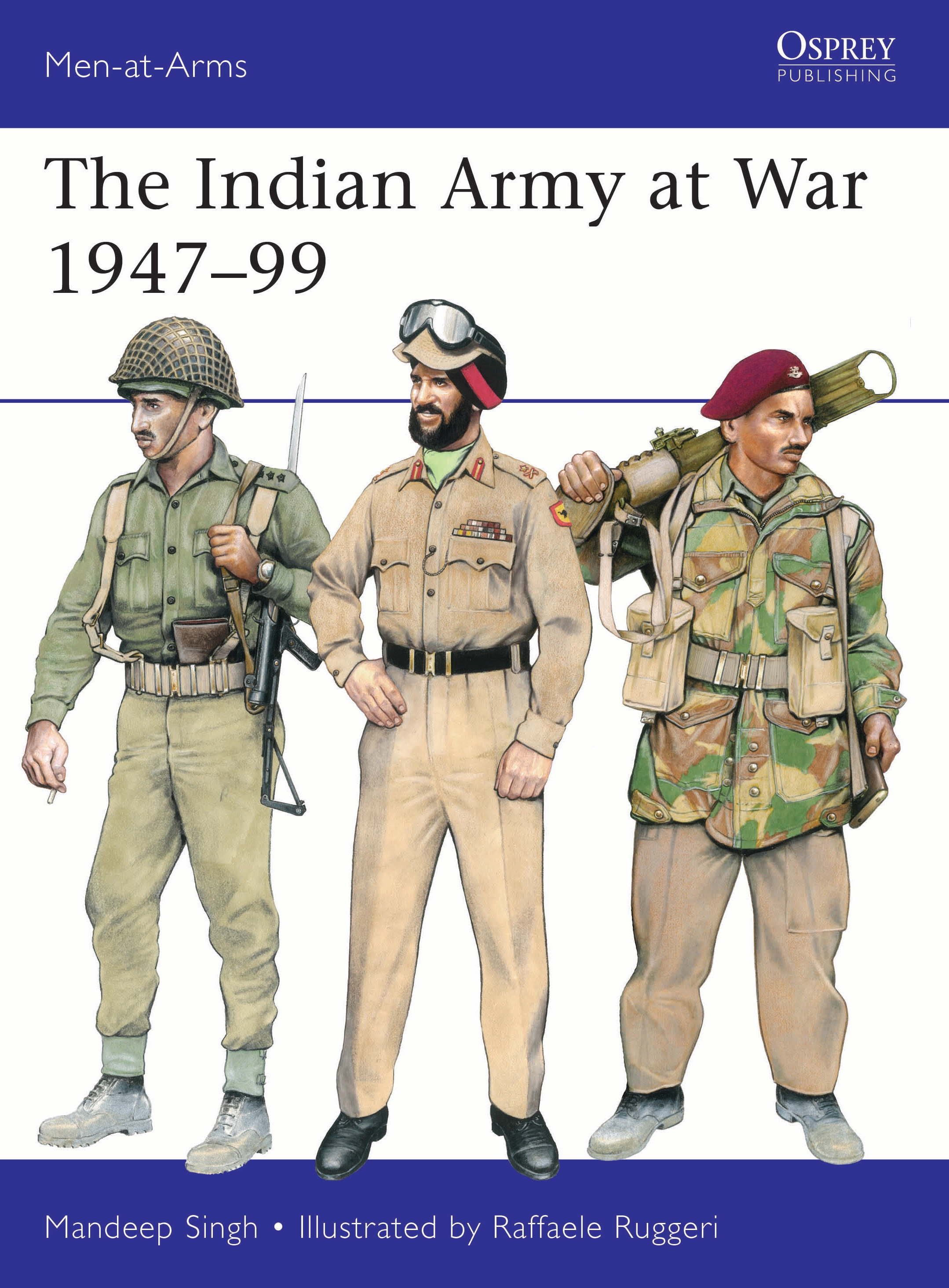
From MAA 566 The Indian Army at War 1947–99.
Comments
You must be logged in to comment on this post. Click here to log in.
Submit your comment