
Payment for this pre-order will be taken when the item becomes available
Description
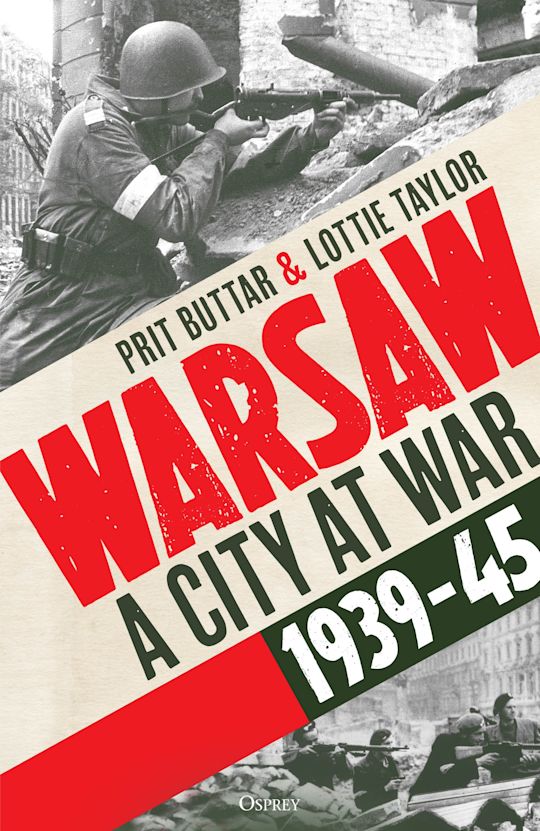
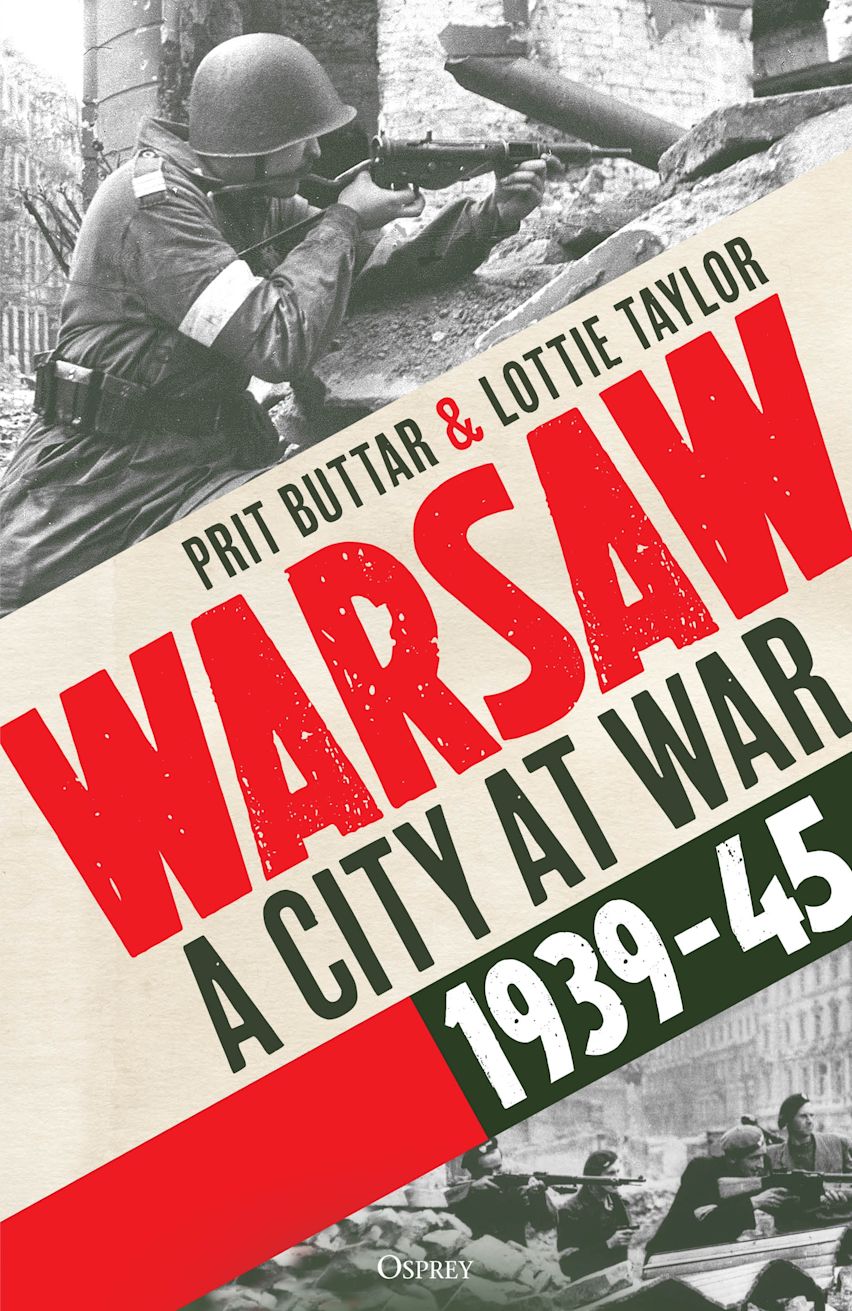
For the first time in English, discover the history of Warsaw's six-year struggle through the devastation of war and the city's enduring spirit.
In Warsaw: A City at War 1939–45, historians Prit Buttar and Lottie Taylor bring to light the unparalleled experience of a city caught between two invading powers, Nazi Germany and the Soviet Union, and the resilience of its citizens.
This fascinating history illuminates how Warsaw's centuries-old fight for identity shaped the course of its wartime experience. For a mere 21 years, Warsaw thrived as the proud capital of an independent Poland, only to be betrayed when Nazi Germany invaded in 1939. Yet the heart of the city – its people – refused to surrender. From the tragic Ghetto Uprising to the heroic city-wide revolt, Warsaw's resistance was fierce as it faced the systematic attempt to erase it from the map. The story does not end with the conclusion of the war, as Warsaw found itself trapped behind the Iron Curtain.
This compelling narrative is not just about battles – it's about a city and its inhabitants, whose unwavering spirit defined them in the darkest of times. Drawing from rare archival material including countless first-hand accounts, Warsaw's wartime years are majestically brought to life.
Table of Contents
List of Maps
Dramatis Personae
Introduction
Chapter 1: The Rebirth of a Nation
Chapter 2: Lebensraum
Chapter 3: Fall Weiss
Chapter 4: A New Partition
Chapter 5: Intelligenzaktion
Chapter 6: Oppression & Defiance
Chapter 7: The Warsaw Ghetto
Chapter 8: Endlösung & The Ghetto Uprising
Chapter 9: Resistance
Chapter 10: Burza
Chapter 11: Tragedy
Chapter 12: The Devastated City
Notes
Glossary
Bibliography
Index
Product details
| Published | 10 Sep 2026 |
|---|---|
| Format | Ebook (Epub & Mobi) |
| Edition | 1st |
| Extent | 432 |
| ISBN | 9781472873408 |
| Imprint | Osprey Publishing |
| Illustrations | 1 x 8pp plate section of black-and-white images |
| Series | General Military |
| Short code | GNM |
| Publisher | Bloomsbury Publishing |


Resources
Book Vote
Tell us what titles you would like to see published by Osprey, then vote for your favourites in our monthly book vote!
Related Titles