
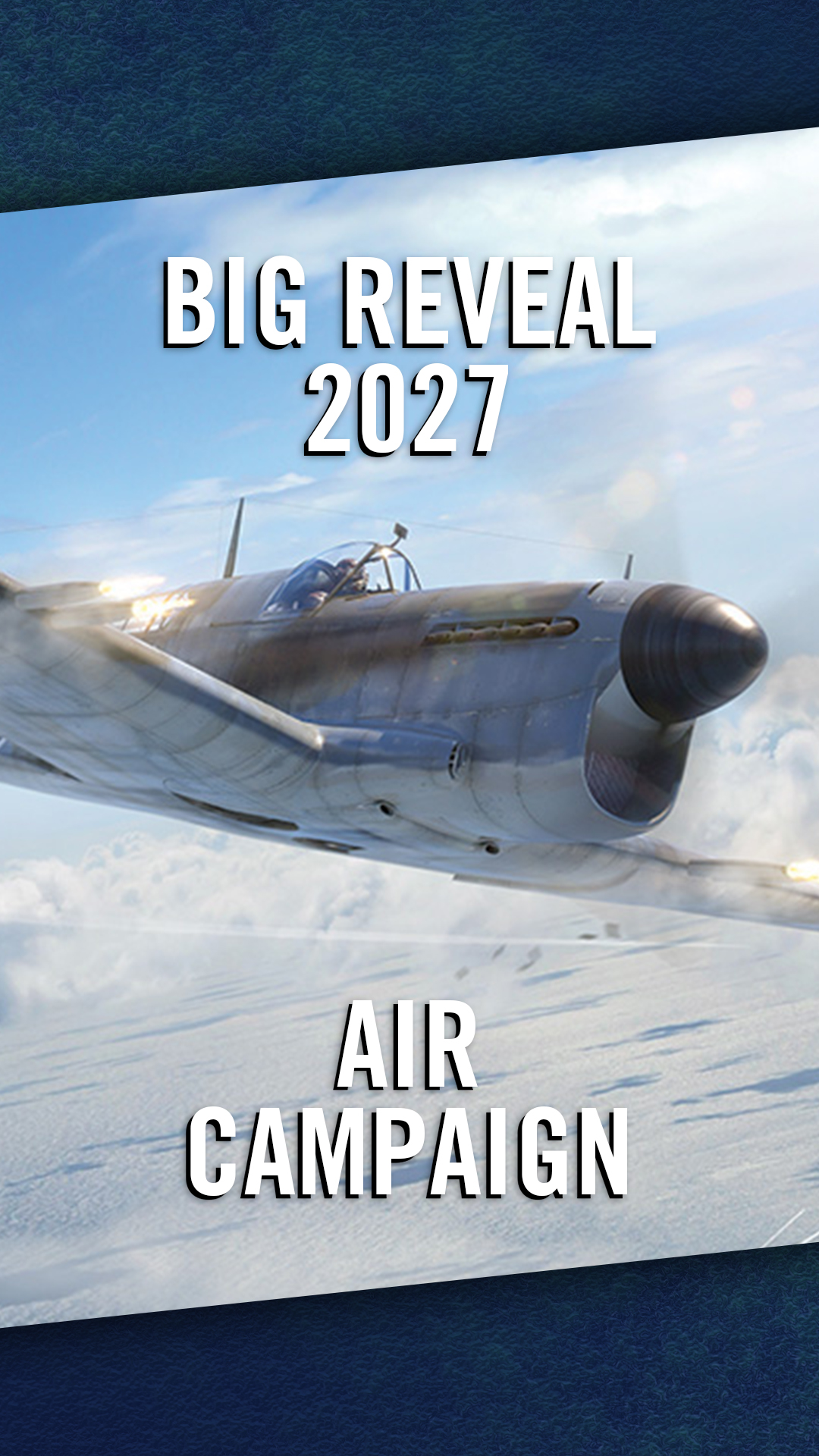
In 2027 we have six new additions to Air Campaign, ranging from new instalments on the Eastern Front and Pacific air wars to the one of the least-known campaigns of the jet age. We are also delighted to finally offer two books which have been much-requested since the launch of the series – Operation Bodenplatte, and my favourite of the year, the Berlin Airlift.
ACM 65 The Kuban 1943: The bloody struggle over the Caucasus
By William E. Hiestand
Illustrated by Adam Tooby
21/01/2027
This is the first book to study the air campaign over the Kuban, the little-known turning point of the Eastern Front air war.
In April and May 1943, the Luftwaffe and Soviet Air Force (VVS) engaged in an intense battle for air superiority over the Kuban Peninsula. Both sides launched maximum efforts to support offensives by their ground forces as the Germans battled to destroy the small beachhead held by the Red Army, while the Soviets tried to drive them into the Kerch Straits. It was the focus of the Eastern Front air war in spring 1943.
Soviet military historian William E. Hiestand explores how this huge air campaign saw the balance of power shift away from the Luftwaffe. Thousands of aircraft fought to support the ground forces and to battle for air superiority. Although the Luftwaffe exacted heavy losses, the Soviets’ capabilities were vastly improved, and by the end of the struggle the VVS had for the first time had seized air superiority from its foes through offensive action. The Kuban also proved to be a ‘school’ for refining new offensive techniques, which would serve the Soviets well in the upcoming battle of Kursk, and through to victory.
Illustrated throughout with rare photos, original artwork, 3D diagrams and maps, this is a detailed study of the first campaign in which the Soviets could meet and match the Luftwaffe in direct battle.
ACM 66 Berlin Airlift 1948–49: The opening battle of the Cold War
By Mark Lardas
Illustrated by Edouard A. Groult
29/04/2027
Fully illustrated throughout, this is a focused study of how the greatest airlift of the 20th century was sparked, organized and flown, and why it succeeded.
The Berlin Airlift was the first battle of the Cold War, and arguably its most decisive operation. In the opening act as the Iron Curtain descended across Europe, the USSR blockaded free West Berlin to force its surrender. Its only chance was a Western airlift on a scale never attempted, to feed and heat a capital city through air power alone.
In this book, aviation historian Mark Lardas studies the Berlin Airlift on the strategic, technical, and operational levels. Berlin would starve if the campaign was not flown relentlessly and at maximum efficiency, eking the most out of World War II technology. Flown by US and British forces with French and local German assistance on the ground, the airlift was initially improvised, but its systems were rapidly streamlined to maximise capacity and speed at all costs, with one transport reaching Berlin every 30 seconds at its height, and it cost more than 100 fatalities.
This is the story of an operation that forged West Germany out of the rubble of occupied zones, led to the West banding together in NATO, proved the capability of Anglo-American air forces to flexibly project power, and saved the West Berliners from the grip of Stalin.
ACM 67 Operation Bodenplatte 1945: Death ride of the Luftwaffe
By Julian Hale
Illustrated by Adam Tooby
24/06/2027
A freshly researched, superbly illustrated assessment of Operation Bodenplatte, the Luftwaffe's desperate bid to support the Battle of the Bulge, and its last attempt at a major offensive.
With the Allies on Germany’s borders, Hitler’s Ardennes offensive – the Battle of the Bulge – was intended to split the advancing British and American armies. The Luftwaffe was to commit much of its remaining fighter strength to support the advance with air cover, preceded by a large-scale attack on the Allies’ airfields. Operation Bodenplatte would be launched on New Year’s Day, 1945.
Drawing upon primary sources including unit diaries, combat reports, and captured German documents, Julian Hale describes and analyses the strategy, tactics and operations of the Luftwaffe fighters and the Allied air defences on 1 January 1945, as the German fighter arm fought its last offensive of the war. He takes care to assess and explain the critical weaknesses which had long made the Luftwaffe's mission impossible, and he fully explains how Bodenplatte sat in the context of the Ardennes offensive.
Packed with archive photos, original artwork, maps and 3D diagrams, this is the story of how the Luftwaffe threw its last coherent units into the war in the West, and how the losses on New Year's Day 1945 sealed its fate.
ACM 68 Atlantic 1939–44: The Luftwaffe's great missed opportunity
By Lawrence Paterson
Illustrated by Adam Tooby
19/08/2027
Fully illustrated, a thorough reassessment of Germany’s famous Atlantic air campaign, and how the Luftwaffe sabotaged its own chances to defeat the convoys.
To many, the Luftwaffe’s Atlantic campaign is synonymous with KG 40 and its Focke-Wulf Condors, the so-called Wolf of the Atlantic. However, the real story of Germany’s biggest and much-misunderstood maritime air campaign is much broader, and represents one of the great missed opportunities of the war.
In this book, Lawrence Paterson reassesses the whole of the Atlantic campaign from its first actions as the Battle of France still raged, with the tragic sinking of the Lancastria off Saint-Nazaire. From autumn 1940 the units detailed to the Atlantic fought a complex war both to guard their new coastline and strike at the Allied convoys. However, despite early successes, the campaign was devoid of strategic planning and commitment, and suffered from the Luftwaffe’s focus on personalities rather than military objectives, leaving the combat units often reliant on good luck. By 1943, the campaign had turned to the defensive, and the end was in sight.
Illustrated throughout with archive photos, maps and original artwork, and examining the full spectrum of the campaign, from the floatplanes, fighters and minelayers that defended the ports and peripheries to the legendary long-range Condors and flying boats, this is a thorough new analysis of how Germany lost the oceanic air war.
ACM 69 Suez 1956: The tripartite jet war against Egypt
By Michael Napier
Illustrated by Gareth Hector
25/11/2027
A superbly illustrated study of perhaps the least-known air campaign of the Cold War period, the complex Anglo-French-Israeli expedition to take control of the Suez Canal.
The Suez campaign was the swansong of the British and French empires, yet this fascinating eight-day amphibious campaign was fought with all the latest equipment of the jet era. The expedition to seize the Suez Canal – aided by an Israeli campaign – was a military tactical success, but it swiftly resulted in the political humiliation of both countries by the Americans.
In this book, airpower scholar Michael Napier examines this unique but little-known air campaign. It is notable for the fascinating range of aircraft involved, many of which saw action nowhere else. The RAF’s latest V-bomber, the Valiant, saw combat, as did Vampire and Venom fighter-bombers and the Fleet Air Arm’s first carrier jets. France’s modern Mystère and Ouragan jets equipped the forces of both France and Israel, as did ageing American-built World War II-era aircraft such as Corsairs and Avengers.
Packed with archive photos, superb original artwork, maps and 3D diagrams, this book explores and assesses the capabilities of 1950s Anglo-French airpower, and the successes and failures of this complex, dramatic operation.
ACM 70 Philippines 1944–45: Airpower leads MacArthur's reconquest
By Mark Stille and John Rogers
Illustrated by Adam Tooby
23/12/2027
In the invasion of the Philippines, the last conquest of the Pacific War, the battle for air supremacy was led by the USAAF. Fully illustrated, this is the first study of the air campaign.
The role of air power during the battles for Leyte and Luzon, and for the entire Philippines campaign, has been largely overshadowed by the huge naval battle fought at the start of the campaign and then by the emergence of the kamikaze. Yet the invasion was built on achieving command of the air, and unusually for the Pacific War, the campaign to do so was led by the US Army Air Force.
In this book, airpower scholars Mark Stille and John Rogers examine this neglected air campaign, which drew on the lessons learned from the vicious fighting over New Guinea. For the Japanese, the defence of the Philippines was deemed utterly essential and worthy of Japan’s remaining strength in the air. But after a rough start, the USAAF succeeded in gaining and maintaining air supremacy, with a large assist from the US Navy, and forced the withdrawal of the last Japanese air forces.
Packed with archive photos, superb original artwork, maps and diagrams, this also detail the reasons for the Japanese failure and what allowed the Allies to win so convincingly, and discusses the impact of the Philippines air campaign on the remainder of the Pacific War.
Comments
You must be logged in to comment on this post. Click here to log in.
Submit your comment