
THE CADET TRAINING SHIPS OF THE ROYAL NAVY
Aidan Dodson tells the story of the ships that took the UK’s aspiring naval officers to sea
for their first experience of the world during the first half of the 20th century.
The training of the next generation of officers has always been a crucial factor for any naval force. As well as classroom-based instruction in myriad subjects, there is also the need to introduce them to ships, the sea and the wider world in general. This has regularly been done through long overseas voyages in dedicated cadet training ships and, indeed, some navies still employ such vessels.
In the Royal Navy, a Royal Naval Academy (from 1806 Royal Naval College) at Portsmouth had catered for what were then termed ‘volunteers’ from 1733 to 1837, when it was repurposed as a place of study for existing officers, and moved to Greenwich in 1873. Training was then essentially ‘on the job’ at sea until 1857, when the 3rd rate Illustrious (1803), which had been a harbour training ship for seamen at Portsmouth since 1854, first formally took officer cadets, with some 105 received that first year. Soon afterwards, the ship shifted wholly to officer training, with 140 aboard in 1858 and 236 in 1859.
This increase in numbers required a larger ship, and in January 1859 the 1st rate Britannia (1820) replaced Illustrious, which reverted to an earlier role of Portsmouth guardship until broken up in 1869. Britannia shifted to Portland in February 1862, but the location proved unsuitable and in September of the following year she was moved to Dartmouth, which would henceforth remain the focus of naval officer training in the UK.
By 1868 the number of cadets had grown to such an extent that more space was required, and the 2nd rate Hindostan (1841) was added to the establishment. In July 1869, the old Britannia was replaced by the screw 1st rate Prince of Wales (1860). The old ship was immediately broken up at Plymouth and the new arrival took her name. In order to provide cadets with experience of steam machinery, the yacht Wave was acquired in November 1882 and moored off the college from 1884. Then, in 1895, the Admiralty began to consider replacing the hulks by a new on-shore facility, and construction began in 1900.
A dedicated Training Squadron of cruisers had been established in 1885 for the training of boy seamen, and was upgraded from the last surviving masted vessels to more modern ships in 1899, when it was also redesignated the Cruiser Squadron. However, a similar system for the training of officer cadets at sea would not be put on a long-term systematic basis until 1902.
The Selborne Scheme and the Dartmouth Cruisers
This new approach was one of the fruits of the Selborne Scheme, implemented between 1903 and 1905. It radically overhauled officer training in the Royal Navy, and was intimately linked with the planned working of the new college at Dartmouth. The Scheme also opened a second new college, at Osborne on the Isle of Wight, in the former favourite residence of Queen Victoria. Here, cadets would spend their first six terms (two years), then progress to Dartmouth for a further two years of study. Osborne opened in September 1903; its first intake was to be the first to go on to the new Britannia Royal Naval College at Dartmouth. Those already in the system at that date completed their training in the hulks, then went to sea for an extended cruise.
Such cruises would at first be of three months’ duration, and embraced home waters and the area between Gibraltar and the Canary Islands. They would be carried out by a dedicated pair of cruisers, which would be tenders to Britannia and based at Dartmouth when not at sea. The first of these was the Eclipse-class vessel Isis (launched 1896), which had returned from the China Station in December 1901. She had then been refitted at Chatham, where she was rearmed with eleven 6in guns (replacing a mixed battery of 6in and 4.7in) and underwent some internal rearrangement to accommodatecadets.
Isis recommissioned on 19 September 1902, arriving at Dartmouth on the 23rd, moving to Plymouth on 2 October, and departing on the 8th for her first cruise, to the Canary Islands; she returned to Plymouth at the end of November. She remained there– the idea of basing the cruisers at Dartmouth having been dropped – until she left for a similar cruise in January 1903. Soon after she returned in March, Isis was joined by the planned second cruiser, Aurora (1887), which had been refitted for the purpose by John Brown on the Clyde, recommissioning at Devonport on 22 April. The two vessels ran parallel cruises beginning in May, Isis going as far as Norway, while Aurora was restricted to the Channel and Irish Sea.
This would be Aurora’s last voyage, however, as the whole of her class were now being withdrawn for disposal, the ship paying off on 18 November; she was subsequently laid up in the Holy Loch, and sold for scrap on 2 October 1907. Aurora’s replacement was Highflyer (1898), which recommissioned at Devonport with Aurora’s crew on 19 November 1904. She began her first cruise, to the Azores and West Indies, on 5 January 1905, returning in March. She then embarked on a summer run to Scottish waters, and was accompanied by the newly assigned Eclipse (1894) for a winter stay in Bermuda from October 1905 to April 1906.
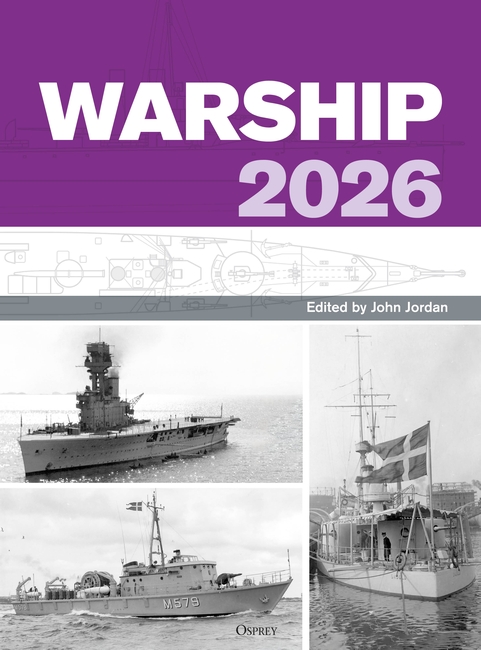
You can read the rest of this article and more in Warship 2026.
Comments
You must be logged in to comment on this post. Click here to log in.
Submit your comment