
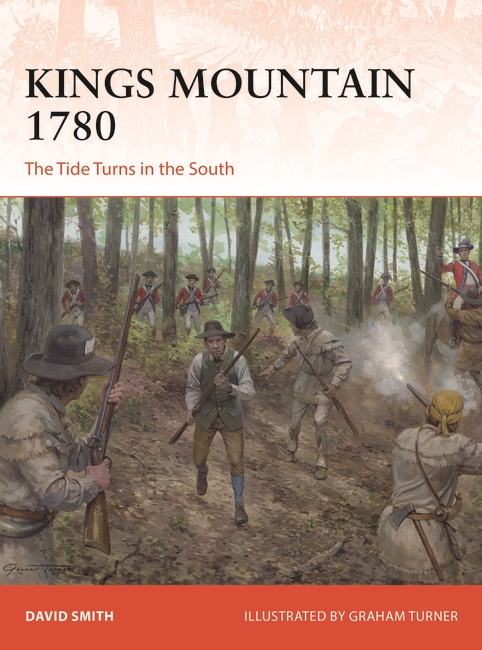
One of the great pleasures of writing military history is the fact that you can look into a familiar subject more deeply and uncover a few surprises. In the case of my research into the Battle of Kings Mountain, I was expecting the biggest problem to be working out what actually happened (using the myriad sources which often contradict each other).
This did prove to be difficult (with some contradictions impossible to reconcile), but the main surprise this book had in store for me was the overturning of a long-standing and familiar legend. Like many others, I had heard the story of the brutal warning Major Patrick Ferguson issued to the “Overmountain Men.” The ensuing battle and the annihilation of Ferguson’s command are usually depicted as the inevitable result of his inflammatory threat.
The story goes that Ferguson sent his message by word of mouth, via a paroled prisoner. The wording was stark, warning the settlers over the mountains that, “if they did not desist from their opposition to the British arms, and take protection under his standard, he [Ferguson] would march his army over the mountains, hang their leaders, and lay their country waste with fire and sword.” It was a dramatic threat, and it appears in many of the standard histories of the battle.
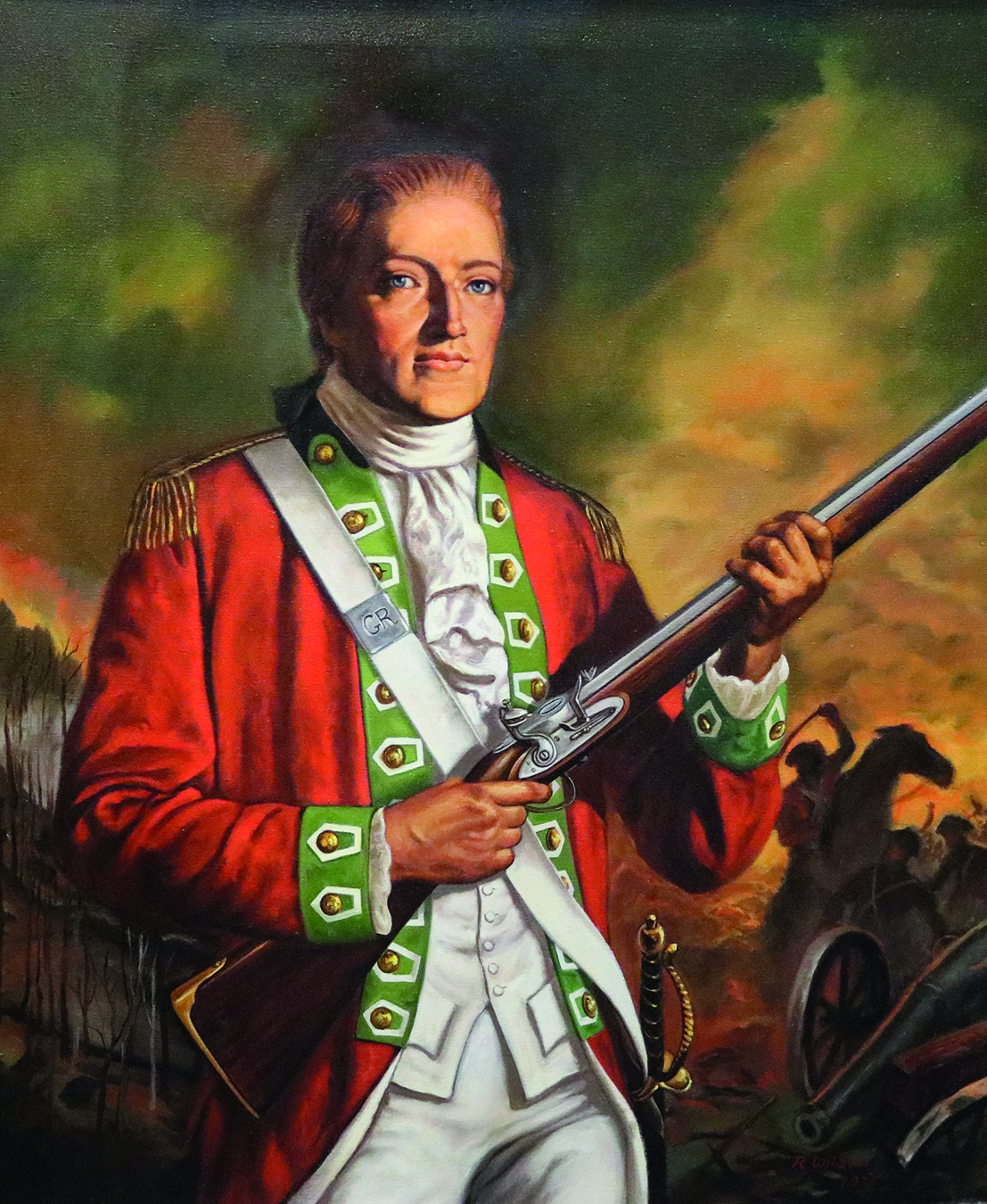
 Portrait of Patrick Ferguson, commander of the Loyalist forces at Kings Mountain, by Robert Wilson. (Kings Mountain National Military Park)
But it probably never happened. Not only was the threat completely out of character for an officer known for his efforts to win people over by persuasion wherever possible, the very fact that it was issued verbally means there is no tangible record of it. It wasn’t mentioned in any of the firsthand accounts of the battle written shortly afterwards. Indeed, the first mention of it was in an account written by Patriot commander Isaac Shelby in 1823. Why he had kept this fragment of information to himself for more than 40 years is unclear, but there is the distinct possibility that he misremembered or simply made it up.
Ferguson’s message, which he mentioned in detail in his correspondence with his commanding officer, Lord Cornwallis, stated that, “the King… holds forth to every American who is disposed to return to his duty an offer of the same free and happy government he formerly enjoy’d, with an exemption from taxation and pardon for all offences; and His officers are strictly commanded to protect to the utmost of their power all men who submit and all women and children of every denomination.”
 “The Gathering of the Overmountain Men at Sycamore Shoals,” by Lloyd Branson. (Lloyd Branson (painter), public domain, via Wikimedia Commons)
There is, of course, the possibility that Ferguson included both elements in his message: the promises to those who submitted to British authority and the threat to those that did not, but it seems unlikely that his behaviour would have undergone such a dramatic change at a moment when he was confident of success, and had no reason to doubt the safety of his command.
In some ways, this is a shame. The legend gave the story a compelling storyline and a neat climax: Ferguson had sewn the wind, and he reaped the whirlwind. War is seldom that simple, and although it will likely continue to make its appearance in some future accounts of the battle, Ferguson’s “fire and sword” warning was probably never issued.
You can read more in CAM 427 Kings Mountain 1780: The Tide Turns in the South.
Comments
You must be logged in to comment on this post. Click here to log in.
Submit your comment